
For early Christians, the saeculum referred to the present worldly age. Christians looked forward to the eschaton, the end of the world that would usher in the kingdom of God. Until that mysterious time, humanity found itself in a fallible, less than ideal, state of sin and ignorance. The saeculum eventually morphed into the idea of the secular as opposed to the religious, which accepted human limitation and made the best of things according to human reason and human effort, which eventually led to the liberal democratic values of the Enlightenment.
Secular humanists decided that this temporary state of affairs was good enough, and that secularism was good in itself, and that we could enshrine it as the basis for a flourishing society indefinitely if not permanently. Religion was an optional extra, best kept private. To use tech language, secularism was seen something like the operating system on a smart phone and any religion or other faith commitment was like an app that could be downloaded or deleted at will.
The traditional Christian view was that the saeculum was maculate and imperfect, and was in principle non-perfectible and not-immaculate. In other words, it resisted any utopian dreams that heaven could be built on earth by political means, whether secular or religious. Communism and Islamism (political Islam), in contrast, both believe that societies and the people in them can be engineered and coerced into their desired vision of utopia.
Using Paul Tillich’s existential theory as laid out in The Courage to Be, I would like to argue for the value of the traditional Christian view. According to Tillich, most ordinary people labour under some form of “pathological anxiety”, or neurosis, what Sigmund Freud called “ordinary unhappiness”. Tillich believed that the multifarious psychological conditions diagnosed by psychologists are superficial. They cover a deeper, more painful “existential anxiety”, of which he describes three: the existential anxiety of fate and death, the existential anxiety of guilt and condemnation and the existential anxiety of doubt and meaninglessness.
Ego defenses against these three types of existential anxiety are formed of false security (against fate and death), false perfection (against guilt and condemnation) and false certainty (against doubt and meaninglessness). When these defenses break down in the face of reality, the dis-illusioned person is plunged into an existential crises of anxiety and despair.
Tillich’s antidote to all this anxiety and despair is “absolute faith”, which is a kind of pure faith without any particular object (it is not a faith in something or other, but faith itself, pure and simple). Now we might say that absolute faith appears to have no specific content, because there is nothing in this present world, the saeculum, to which it adheres. This being so, we could say that it is an absolute faith in the mysterious kingdom of God, beyond and outside time and space.
So the right attitude towards the two worlds of the secular and the spiritual is twofold. In relation to the kingdom of God, it is absolute faith. In relation to the world, it is a certain acceptance and tolerance of the fallibility of human imperfection, uncertainty and insecurity. We deal with guilt and condemnation through confession and forgiveness, not through false moral perfection. We stop trying to make ourselves right all the time. We deal with fate and death through the wisdom of insecurity, as Alan Watts put it, not through avoidance of mortality and a false sense of security. Finally, we deal with doubt and meaningless through negative capability. As John Keats famously described it, “when a man is capable of being in uncertainties, mysteries, doubts without any irritable reaching after fact and reason”.
But then you have the crowning nondual mystical experience. The kingdom of God is at hand. This very land is the Pure Land. And it is absolutely perfect, certain and secure.

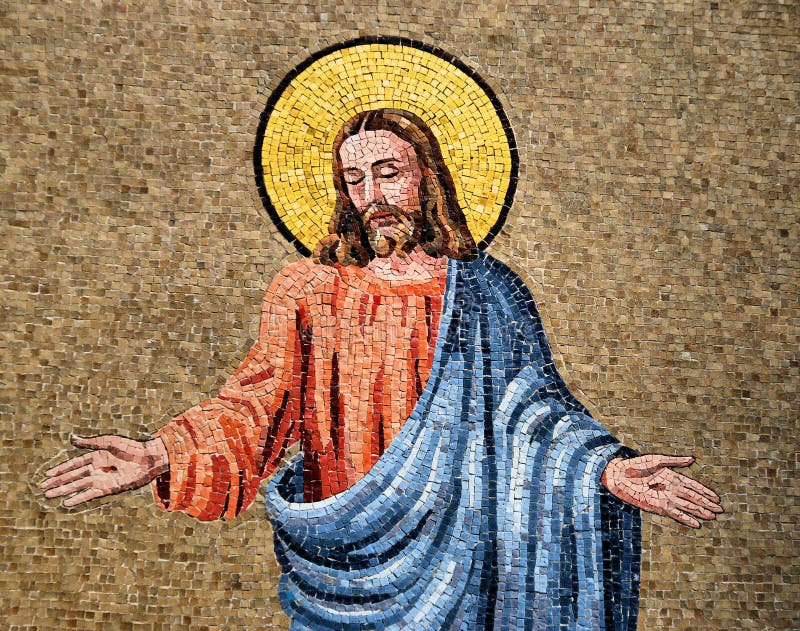
 bread of life