
Nondual awareness, Christian holiness and psychedelic enchantment provide the threads that weave the fabric that is numinous, holy and just so. Whichever is foregrounded in the moment, all three are always at play. This is the essence of Zen Christian Shamanism – a perpetual, dynamic, spiritual weave.
Author: sebjig
Mythical Mushroom Magic: A Cautionary Note
Myth is the language of dreams and the collective unconscious, an enchanted world of heroes, villains, entities, archetypes, fantasy, imagination. Here be dragons. Here be tarot, astrology, Wicca, necromancy, esoterica, etc. etc. Here be New Age Hippy Pagans. Here be Psychedelic Astral Travellers.
Of course dreams are useful and necessary. We need to dream in order to process undigested psychic baggage carried over from our waking lives. But dreaming (in the literal and Aboriginal sense) is seductive and perilous. Spend too long here and you may find that you can’t wake up. The faerie folk have thee in thrall.
This way madness lies. Paranoid schizophrenia. Psychosis. Or just Away With The Faeries.
By all means paddle in the mythopoeic ocean of the collective unconscious, the “sea of stories”, and let its reflected magic bring some sparkle to your life. Let yourself be enchanted now and then. But don’t put your trust in the “spiritual world”, the world of spirits. Put your trust in the Lord.
Risking Enchantment
In the nineteenth century, Max Weber described what he called the dis-enchantment of Modernity. Morris Berman and Thomas Moore call for its re-enchantment, as does Sharon Blackie. Rod Dreher worries that the real danger in our brave new world of New Age and Occult lunacy is not dis-enchantment but mis-enchantment, since when people cease to believe in God, they do not then believe in nothing, but in anything. Sharon Blackie thinks he’s a nutjob (sic).
Who are the orthodox here? Who are the heterodox? Who are the heretics? Of those who risk enchantment, which will find it and which will lose it?
When it comes to psychedelics, this is is a matter of (spiritual) life and death. Personally, I have come to the conclusion that the whole issue turns on the head of one tiny pin (on which are dancing an indefinite number of angels). Or perhaps thorn is more accurate. I’m talking about the OG – God.
This will annoy many people of course. Let it be known that I don’t mean “Old Grey Beard”, “Sky Daddy” or even “The Christian God”. I mean the actual, ineffable, living God that spiritual traditions the world over point to in their various different ways. It’s God or Babylon, whichever way you turn it, twist it or try to wriggle out of it.
The actual presence of God is primary. Everything else is secondary. In my idiosyncratic terminology, “One, Three, Seven” are primary and “Twelve” is secondary (see Between the One and the Many). And safety is found only within the orbit of the Twelve (planet Earth). Beyond that, you risk finding yourself lost in space, drifting between Saturn and the fixed stars (see William Blake’s The Marriage of Heaven and Hell).
On earth Thou hidest, not to scare
The children with Thy light,
Then showest us Thy face in heaven,
When we can bear the sight.
Frederick William Faber
The Bubble
Imagine that the world around you exists in a bubble in the middle of the ocean. The domed sky above you is the inner surface of the bubble, as is the peripheral view as it disappears to your left and right and the ground as it rises to join the sky in front of you.
At this moment, you have a particular view of the world in the bubble from one point on the inner surface. You can’t see behind you, so it’s as though your view in is through an opening in the bubble.
What is behind you? You can’t turn around to look because wherever you turn, the invisible opening is behind you. You are not that which can be observed; the subject cannot see the subject; the eye cannot see the eye.
That which is behind you is the same as that which is beyond the sky. It is the ocean. The world is in a bubble in middle of the ocean, remember? But it’s not an ocean of saltwater – it’s an ocean of infinite consciousness. Call it “Parashiva”.
The thin film that constitutes the bubble itself is “Shiva”, which is to say, your individual consciousness aware of your individual world. This is what is directly behind you – your Self, behind which is the infinite “Parashiva”. Everything that Shiva experiences in the bubble is “Shakti”. This is your world.
Once you become cognizant of this state of affairs, you soon discover that Shiva can move in one of two directions; backwards or forwards. You can back up to the noumenal Source or merge with the phenomenal Stream. You can unite with Parashiva or Shakti.
Both movements result in a nondual mystical experience, one “introvertive” and the other “extrovertive”. Merging individual Shiva consciousness back into universal Parashiva consciousness is experienced as ego-dissolution, or ego-death. Merging with Shakti is experienced as an egoless state of Zen.
Parashiva – Shiva – Shakti
Lord – I Am – Zen
That’s all very well, I hear you say, but haven’t we missed something important? What about the mind? What about our feelings, sensations, desires, habits, memory, will, understanding? What about the unconscious? What about the soul?
It’s as if the bubble has another smaller bubble floating around it, like a moon. This is the “Imaginal”, the soul-space where all the soul-stuff happens. Shiva shuttles back and forth between these two bubbles all the time.
All the time, that is, while time exists. When Shiva is merged with Parashiva in perfect unity (as the One) or with Shakti in perfect multiplicity (as the Many), there is no time, at least not in the way we ordinarily experience it, and there is no Imaginal.
Maybe some real life,
to refresh beginner’s mind
all over again.
Zezan Tam
Charging, Tripping, Vibing
For me, the classic mushroom ride has three broad phases: charging, tripping and vibing.
The onset may be gradual or sudden, but at some point early on, I find myself in a psychedelic palace of bright geometrical colourful light, soon to be plugged in to the great alien charger in the sky. Sometimes parts of my body, often starting with my teeth and jaw, are nuked one pixel at a time. Sometimes great surges of high voltage energy course through me in incandescent waves.
Then suddenly, it stops. I am unplugged. The energy drains away and the lights go out and I am left shivering uncontrollably. I reach for a blanket and pull it over me. And the journey begins. I know this place. It’s like waking up in a recurring lucid dream. I know that I am in for a hard and humbling existential journey into the heart of the human condition and the human story. There will be suffering and pain, but with it insight and compassion.
The trip varies in length and intensity, and can be more or less enjoyable or challenging. As it fades, I find myself back in the “real world”, ready for the third phase. In this phase, I surrender to the music. I listen so intently and intensely that I am almost aware of nothing else. It is a whole other trip in its own right, but dictated by the musical imagination of the artist. At this stage of the playlist, lyrics are introduced, which fires the imagination, as it resonates and vibes ever more deeply with the music.
This vibing phase has a strong emotional and then spiritual texture, as the music moves into sacred mode with a choral mass setting. We bless and are blessed.
The Stained Glass Temple
As the sound of waves lapping the shore faded into silence, I caught a glimpse of myself through God’s eyes. Every experience, every impression, thought, feeling, every relationship, every event, every memory, everything that had ever happened in my inner and outer life, was one coloured piece of glass in a great stained glass temple. It was beautiful. God seemed to like it anyway. But I was just one among millions of temples he enjoyed visiting.
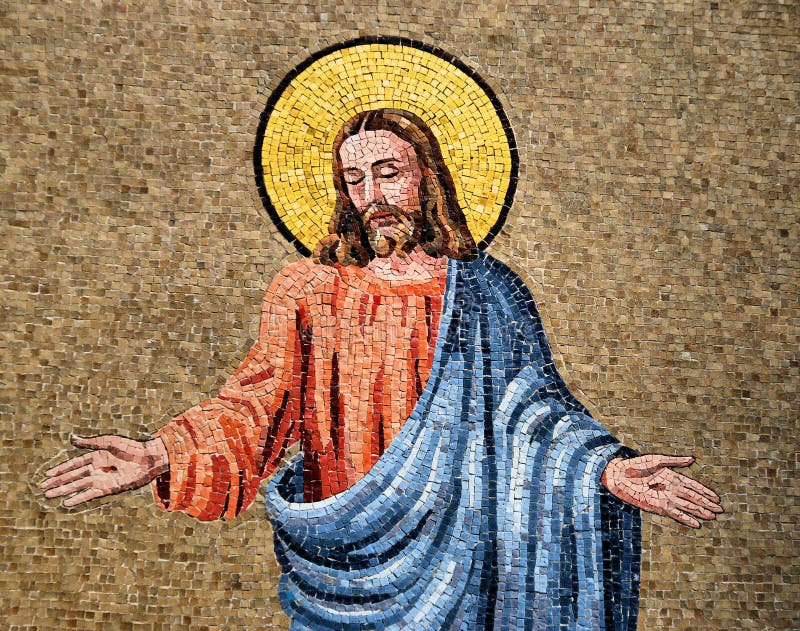
Jesus was in there. But He was only one small part of a much larger structure. He was in me, but not I in Him. In a flash I saw all the world’s religious personalities merely as elements in the great crystal mosaic that was me, but that God’s experience of Himself through me was much more than any or all of them, much more than any religious ideas or religious experiences. I saw that God is much bigger than “spiritual-God-related-sacred-stuff”, that He is literally everything I am.
What’s the point of religion then? What’s the point of Jesus? I understood in another flash that an organising principle is necessary in order to create a coherent, ordered structure of translucent beauty. A random jumble of chaotic impressions and experiences is not well pleasing to God, and neither is a tangled thicket of confused and frustrated desires and opinions. The point of religion then, and the point of Jesus, is to help us build a fitting temple for Him to enjoy during our brief sojourn here (not necessarily in three days!), that He may see us and Himself through us and that we may see ourselves through Him, that our joy may be full.
“One thing have I desired of the Lord, that will I seek after; that I may dwell in the house of the Lord all the days of my life, to behold the beauty of the Lord, and to enquire in his temple.”
Psalm 27:4
Alternatively, what I saw was the two dimensional quantum information boundary of the holographic projection of a three dimensional self in Hilbert space, which kind of looks like a stained glass temple.
“You are not a collection of things, you are a song the universe is singing, a temporary melody in an eternal composition. And when the melody ends, the music doesn’t stop, it simply moves on to the next note, the next pattern, the next moment of the eternal symphony. There are no particles, there is only the field, there is only the process, there is only the pattern, and you are one beautiful, temporary, infinitely precious pattern in the infinite creativity of the quantum fields. Not made of things, made of music, made of mathematics, made of the same fundamental reality as stars, stones and distant galaxies. You are not separate, you never were. You are the universe experiencing itself for a brief moment before dissolving back into the eternal field structure from which all patterns emerge and to which all patterns return. There are no particles, only fields, only patterns, only process, and you are that process aware of itself for one precious fleeting moment.”
Roger Penrose
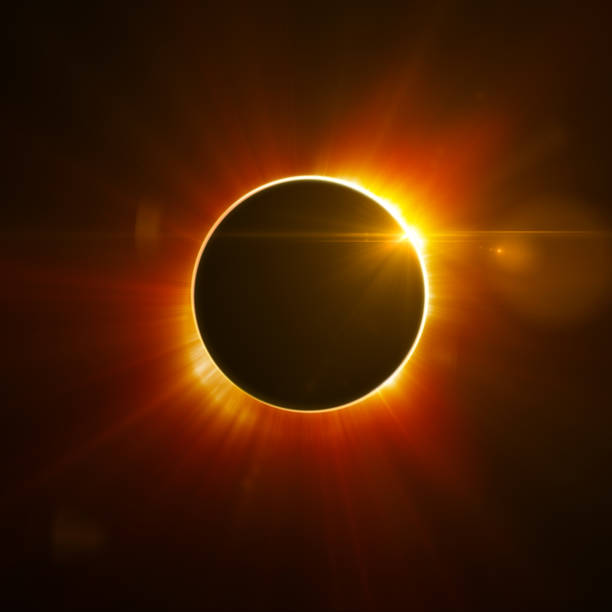
“All that you touch, and all that you see, all that you taste, all you feel, and all that you loved, and all that you hate, all you distrust, all you save, and all that you give, and all that you deal, and all that you buy, beg, borrow or steal, and all you create, and all you destroy, and all that you do, and all that you say, and all that you eat, and everyone you meet, and all that you slight, and everyone you fight, and all that is now, and all that is gone, and all that’s to come and everything under the sun is in tune, but the sun is eclipsed by the moon.”
Roger Waters
o
Moral of the story: Get your head out the way
A Serious Call to a Devout and Holy Life
For as philosophy professes purely the search and enquiry after knowledge, so Christianity supposes, intends, desires, and aims at nothing else, but the raising fallen man to a divine life, to such habits of holiness, such degrees of devotion, as may fit him to enter among the holy inhabitants of the kingdom of heaven.
William Law
A Spiritual Life Subject to Many and Wonderful Changes
A spiritual life is subject to many and wonderful changes, interior as well as exterior, and all are according to the mere will and good pleasure of God, who is tied to no methods or rules; therefore, following Him in all simplicity and resignation, let us wonder at nothing; let us neither oblige ourselves too rigorously to any exercise, nor refuse any to which He shall invite us, seem it never so strange, or to natural reason even senseless. For in His guidance there can be no danger of error, but, on the contrary, there is all security; and this may and ought to be a great comfort and encouragement to a well-minded resolute soul.
Reverend Augustine Baker
The Gate, the Bridge and the Fence
1
Through the gateless gate, the gate disappears: all is one. Nothing more can be said; nothing more can be thought: one hairbreadth’s difference and heaven and earth are set apart.
3 and 7
The shaman is a bridge between heaven and earth. So is the the prophet, the priest, the Christ, the Logos, the Mantra, the Shushumna, the Axis Mundi.
12
The garden is fenced about by the cycle of time, which is the orbit of the Earth around the Sun. Without a fence, all things fall apart and all things fly apart.
Six Breakthoughs
There are many ways of breaking through (I suppose).
Here are six I have personally experienced several times (not necessarily in order of preference):
- The Psychedelic Palace. More often than not the onset is sudden: vivid colourful geometric imagery which flows and dances with the music. It is a familiar space, a happy place.
- The Black Hole. At some point in the proceedings you slip into a black hole and emerge some time later unsure where you’ve been exactly. You can’t remember much and the music has passed unnoticed.
- Regeneration. This is an experience of intense energetic dissolution and regeneration. It feels like all the atoms in your body are simultaneously and individually zapped by an alien regeneration machine.
- Death and resurrection. This takes the form of a physical descent into the underworld, either earth or sea or ice caves, followed by an ascent and rebirth into the light. It usually includes a period of intense discomfort and claustrophobia and identification with the sufferings of humanity and/or all of life before the blissful release.
- Apocalypse. Potentially very frightening, especially the first time. The world disappears, dissolves, evaporates, revealing an infinite plenum void of mysterious awesome Godhead. There is a dreadful feeling that this is in fact the end of the world. Eventually however, existence reconstitutes itself, one veil at a time. For some musings on this breakthrough, see the blog post Apocalypse.
- Everything/Nothing Whiteout. This is the classic ego dissolution experience of mystical union with God (for want of a better word). It can be experienced as strange or familiar, blissful or terrifying. There is a sense of timelessness and spaciousness. Sometimes there is the bare feeling “I Am” or even “I Am God”. Although it can feel like an eternity, with hindsight it is possible to estimate the time as a matter of minutes. The pure state (without any thoughts at all) doesn’t generally last very long.
If none of these breakthroughs bring you to a state of Dust and Ashes before the inconceivable Mysterium Tremendum, you’re not quite getting it.
 bread of life